

Skincare technology has changed the way people approach their daily routines. Alongside traditional cleansers, moisturizers, and serums, at-home beauty devices have become increasingly popular among people looking for convenient ways to care for their skin. LED light therapy is one example of this shift, offering a technology-based approach that can complement an established skincare routine.
Unlike topical products that work on the skin’s surface, LED devices use specific wavelengths of light. Different colors are associated with different skincare applications, making it important to understand what a device offers before adding it to your routine. Choosing the right product also involves considering comfort, safety, treatment instructions, and realistic expectations.
What Is LED Light Therapy?
LED stands for light-emitting diode. In skincare, LED devices deliver controlled wavelengths of visible or near-infrared light to the skin. These devices are available in professional treatment settings and in consumer products designed for home use.
LED light therapy is not the same as ultraviolet tanning. Skincare LED devices use selected wavelengths rather than UV light, and different wavelengths are designed for different purposes. Red and blue light are commonly discussed in relation to facial skincare, while near-infrared light is another option found in some devices.
Research into at-home LED treatments continues to develop. A 2025 systematic review published in JAMA Dermatology examined studies involving red and blue LED devices for acne and reported encouraging findings, while also noting the need for further research. Readers can explore the published research on at-home LED devices for a closer look at the evidence.
Understanding Different LED Light Colors
Not every LED mask uses the same wavelengths or offers the same treatment modes. Understanding the basic differences can help consumers compare devices without relying entirely on marketing language.
Red Light
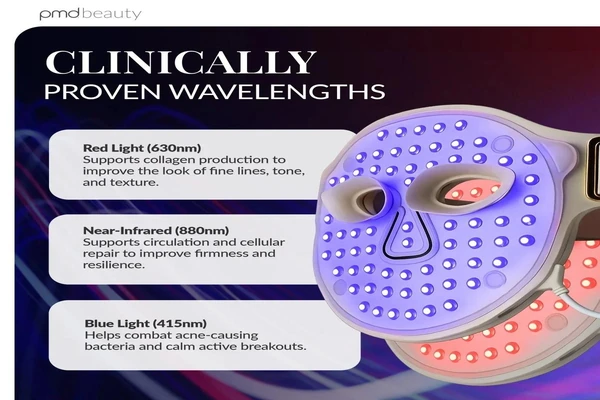
Red light is commonly associated with skincare routines focused on the appearance of fine lines, skin texture, and firmness. Some devices use red wavelengths as part of a broader facial treatment approach.
The results of light-based treatments can vary depending on the device, its settings, and how consistently it is used. Red light should therefore be viewed as a possible addition to skincare rather than a replacement for established skin-health practices.
Blue Light
Blue light is often associated with blemish-prone skin. Dermatology resources explain that visible blue and red light devices may help treat certain types of acne, particularly pimples, but they are not effective for every form of acne.
The American Academy of Dermatology provides a useful overview of lasers and light treatments for acne, including what visible-light devices can and cannot address.
Near-Infrared Light
Near-infrared light is used in some skincare devices alongside red light. It is not visible to the human eye, but it is included in certain treatment systems designed to deliver multiple wavelengths.
When comparing products, look for clearly stated wavelength specifications instead of choosing a device simply because it advertises several light colors.
What to Look for When Choosing an At-Home LED Mask
The appearance of a device is only one part of the buying decision. A suitable mask should be practical to use, clearly explained by its manufacturer, and designed with appropriate safety considerations.
Consider these factors before making a purchase:
- Wavelength information: Check whether the manufacturer clearly identifies the wavelengths used and explains their intended applications.
- Coverage: Look at how the LEDs are distributed across the face, including areas around the nose and mouth.
- Comfort and fit: Flexible materials and adjustable straps can make a device easier to position.
- Treatment settings: Multiple intensity options may provide more control over the treatment experience.
- Cleaning requirements: A surface that can be cleaned according to the manufacturer’s instructions is important for regular use.
- Instructions and support: Clear operating guidance, warranty information, and customer support can make a product easier to evaluate.
A device should not be selected based on the number of LEDs alone. Wavelength accuracy, coverage, usability, and safety information are also important considerations.
Why Full-Face Coverage and Comfort Matter
An LED mask is designed to sit over the face during a treatment session. If the device is uncomfortable or difficult to position, users may find it harder to follow a consistent routine.
Flexible construction can help a mask sit closer to different facial contours. Coverage is also worth reviewing because the placement of LEDs determines which areas receive light exposure. A well-designed device should explain how its light sources are distributed rather than relying on general claims about performance.
For people who prefer technology-based skincare, the advanced LED mask from PMD Beauty is one option to explore. The product is described as an FDA-cleared device with 201 medical LEDs arranged across 67 light zones. It combines red light at 630 nm, near-infrared light at 880 nm, and blue light at 415 nm.
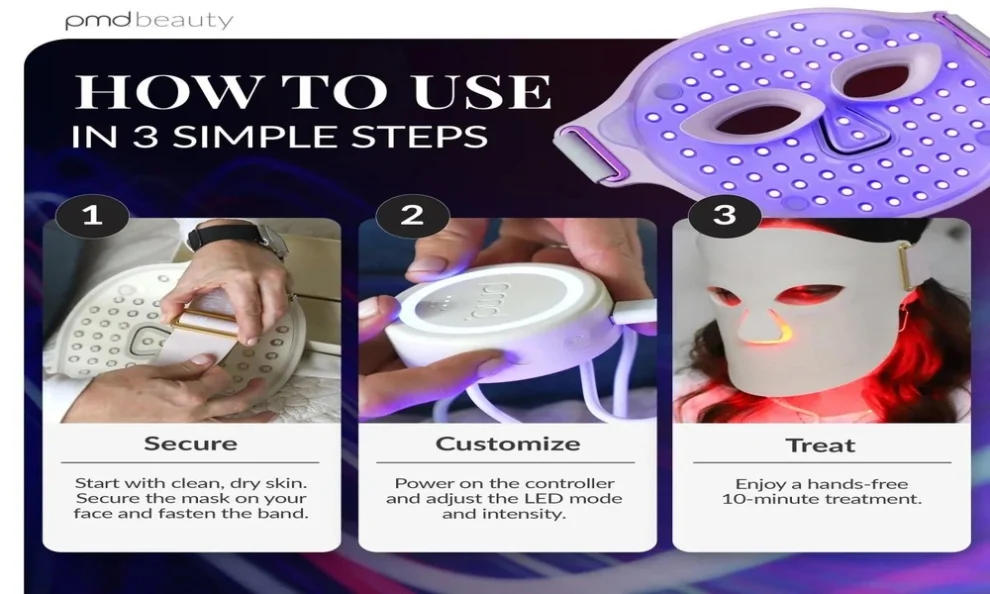
The mask also features three adjustable intensity levels, flexible silicone construction, built-in eye protection, and a hands-free headband. Its manufacturer describes a 10-minute treatment session. As with any skincare device, users should review the official instructions and determine whether its features are appropriate for their needs.
How to Incorporate LED Treatments Into a Skincare Routine
A beauty device works best when it fits comfortably into a routine that is already manageable. Adding too many steps or products at once can make it difficult to understand what is working for your skin.
Before using an LED mask, begin by reviewing the manufacturer’s instructions. Many devices are intended for use on clean, dry skin, so makeup, sunscreen, and other skincare products may need to be removed first.
A simple routine can include the following steps:
- Cleanse your face: Remove makeup, sunscreen, and surface impurities with a suitable cleanser.
- Dry your skin: Follow the device instructions regarding whether the skin should be completely dry before treatment.
- Position the mask: Adjust the mask and straps so that it sits comfortably and correctly.
- Choose the appropriate setting: Select a treatment mode and intensity according to the manufacturer’s guidance.
- Complete the session: Follow the recommended treatment duration rather than extending it unnecessarily.
- Continue with skincare: Apply suitable moisturizing products after the session if recommended by the device instructions.
Consistency matters, but more frequent or longer treatments are not automatically better. Follow the schedule provided by the manufacturer and avoid combining treatments in ways that could irritate your skin.
Connecting LED Treatments With Other Skincare Habits
LED technology is only one part of a broader approach to skin care. Gentle cleansing, adequate moisturization, and daily sun protection remain important habits. A device should complement these practices rather than replace them.
For example, people who enjoy traditional skincare preparation may also find it helpful to understand the steps discussed in Yilena Fashion’s guide to what to do before and after face steaming. However, steaming and LED treatment are different activities, and one should not be assumed to improve the results of the other.
A balanced routine should also account for lifestyle and practical needs. People who travel frequently can benefit from reading about travel-friendly skin care, particularly when deciding which products and tools are realistic to carry and use away from home.
Safety Considerations Before Using an LED Mask
At-home skincare devices should always be used according to their specific instructions. Even when a product is designed for consumer use, it is important to understand its precautions and limitations.
Keep these points in mind:
- Read the full instruction manual before the first session.
- Use the recommended eye protection and built-in safety features as directed.
- Do not increase treatment time or intensity beyond the manufacturer’s guidance.
- Stop using the device if you experience unexpected discomfort or irritation.
- Ask a qualified dermatologist for advice if you have a skin condition, take medication that increases light sensitivity, or are unsure whether light therapy is suitable for you.
The American Academy of Dermatology also recommends following the directions supplied with an FDA-cleared red-light device and using the specified eye protection when required. You can read its guidance on red light therapy and skin safety.
It is also important to understand that FDA clearance applies to a specific device and its authorized use. It should not be interpreted as proof that every LED mask offers identical results or is suitable for every person.
Setting Realistic Expectations
At-home LED treatments are not instant solutions. The experience and visible results can differ from one person to another, depending on the device, treatment schedule, skin concerns, and other factors.
Consumers should be cautious about products that promise dramatic changes within a few sessions. A device should provide transparent information about its technology, recommended use, and limitations.
It is equally important to remember that LED treatments do not replace medical care for persistent acne, unusual skin changes, or other dermatological concerns. A dermatologist can help determine whether light therapy is appropriate and how it may fit alongside other treatments.
Final Thoughts
LED light therapy has become an interesting option for people exploring modern at-home skincare technology. Different wavelengths, treatment settings, coverage, and comfort features all influence how a device fits into a daily routine.
Before choosing an LED mask, take time to compare its specifications, review its safety guidance, and consider whether its design suits your needs. A well-informed purchase and a consistent, realistic skincare routine are more valuable than following beauty trends or expecting overnight results.
